
STEALTHBAR
Creative reference speaker
Conceived as an extension of Mackie’s home studio lineup, the StealthBar addressed the limitations of desk space in modern creative environments.

Initial StealthBar concepts were developed with an understanding of Mackie’s established position in the studio monitor market. Rather than chasing novelty, the goal was to explore how a new form factor could evolve the brand’s visual language and performance expectations while remaining credible within a well-defined category.

This concept references the perforation language found in Mackie’s larger live sound products, creating a visual connection across categories. The illuminated feet were explored as a subtle way to indicate power while introducing a soft ambient presence to the workspace.


Instead of relying on psychoacoustic bass enhancement, the system was designed to pair with a compact subwoofer to deliver real low-end performance.

This concept moves away from the typical rectangular or pill-shaped enclosure by cantilevering the side volumes to create a more dynamic profile. The offset geometry created an opportunity to introduce subtle downlighting along the sides, contributing a restrained ambient glow. Primary controls were envisioned as hinged elements integrated into the top rear surface, allowing functional access while preserving the overall clarity of the form.
After presenting concepts and taking a closer look at the market, it became clear the product should live within the existing CR-X line rather than launch as something entirely new. I adjusted the design to carry forward the CR-X language into the soundbar format so it felt consistent with the family.
I worked directly with two contract manufacturers to resolve internal architecture and develop fully costed FBOMs, giving the team clear data to make a final sourcing decision.
As acoustic volume and internal packaging developed, the controls moved from the top to the side to better support the mechanical layout and overall usability.

CRX reference


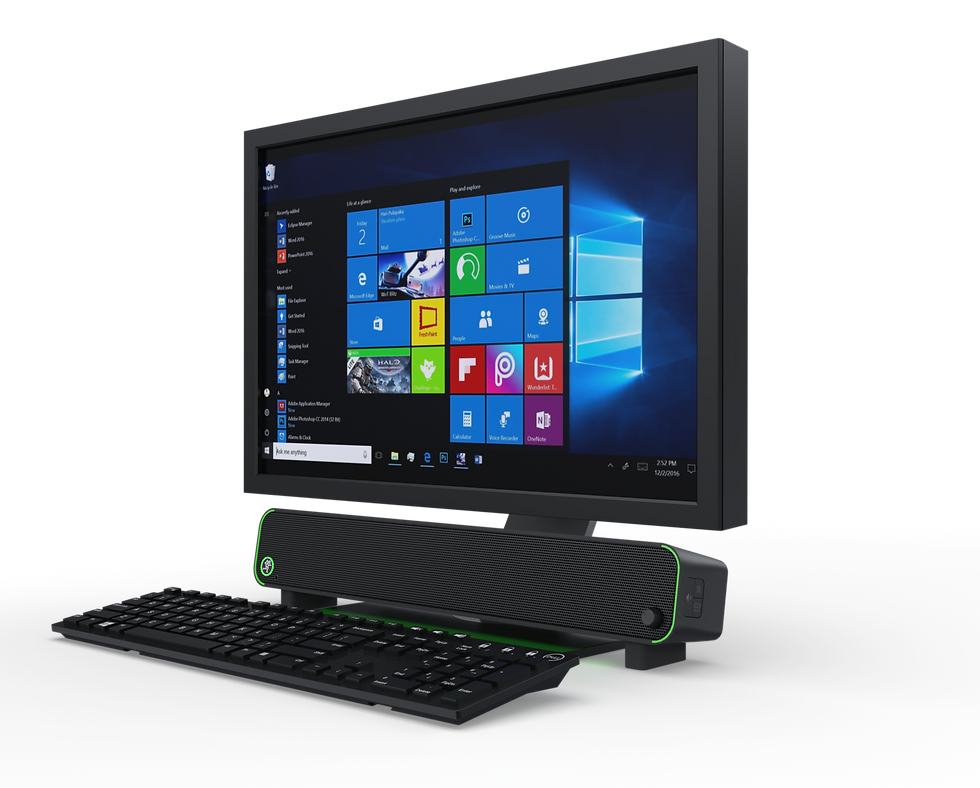
The final design brings the CR-X language into a compact soundbar format built for real desktop constraints. Acoustic performance, internal packaging, and manufacturing realities were addressed early to keep the concept grounded in production feasibility.
The result is a focused, space-conscious system that feels like a natural extension of the studio monitor family.
